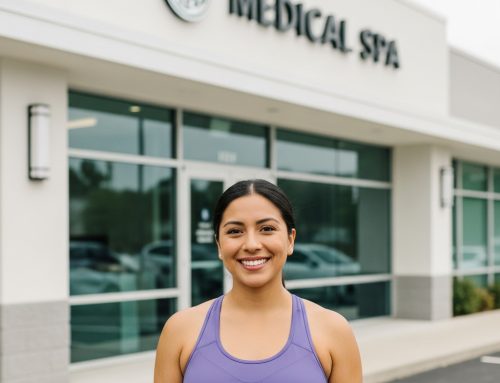
What Is the Most Effective Weight Loss Program in Grand Prairie?

You’re standing in your kitchen at 6 AM, staring at that protein shake you swore would change everything. The same kitchen where you’ve started – and abandoned – more diets than you care to count. There’s the fancy juicer gathering dust from your “green juice phase,” the meal prep containers from that brief moment you thought you’d conquered portion control, and… is that really a bread maker tucked behind the coffee pot from your “I’ll just bake everything myself” era?
Sound familiar?
If you’re nodding along, you’re not alone. And honestly? You’re definitely not broken or lacking willpower – you’ve just been caught in the endless cycle of trying every shiny new weight loss trend that promises to be “the one.” You know what I’m talking about: those programs that work brilliantly… for exactly three weeks. Then life happens, the rules feel impossible to follow, and you’re back to square one feeling worse about yourself than when you started.
Here in Grand Prairie, we’re surrounded by options – and that should feel empowering, right? Instead, it often feels overwhelming. Drive down any major street and you’ll see everything from big-box gyms promising rapid transformations to boutique studios with intimidating names like “SweatFest Revolution.” Your social media feed doesn’t help either, constantly serving up before-and-after photos that make weight loss look effortless (spoiler alert: it’s not, and those people have struggles too).
The thing is, you’ve probably already proven to yourself that you *can* lose weight. Most people reading this have lost the same 20-30 pounds multiple times. The real question isn’t whether you can do it – it’s whether you can find something sustainable. Something that doesn’t require you to meal prep for three hours every Sunday or avoid birthday parties because cake exists.
What makes this even more frustrating is that everyone seems to have an opinion about what works best. Your neighbor swears by keto. Your coworker won’t stop talking about intermittent fasting. Your sister-in-law keeps sending you links to that fitness influencer who apparently eats nothing but salmon and sweet potatoes. Meanwhile, your doctor mentions “medical weight loss” but doesn’t really explain what that means or whether it’s right for you.
And let’s be honest about something else – you’re probably tired of feeling like weight loss has to consume your entire identity. You want to lose weight, yes, but you also want to show up for your kids, excel at work, maintain friendships, and maybe even enjoy a dinner out without calculating macros on your phone. You want a life that includes being healthier, not a life that revolves entirely around being healthier.
That’s exactly what we’re going to tackle here. Because the truth is, the most effective weight loss program isn’t necessarily the one with the most dramatic testimonials or the fanciest marketing. It’s the one that actually fits into your real life – complete with soccer practices, work deadlines, family dinners, and yes, even the occasional stress-eating session after a particularly brutal day.
We’re going to walk through what actually makes weight loss programs work long-term (and why so many fail). You’ll learn about the different approaches available right here in Grand Prairie – from traditional programs you can do on your own to medically supervised options that might surprise you. We’ll talk about what to look for, what red flags to avoid, and how to know if you’re ready for something more structured than DIY dieting.
Most importantly, we’ll help you figure out what “effective” actually means for you. Because maybe effectiveness isn’t just about how quickly you lose weight – maybe it’s about finding something you can actually stick with while still feeling like yourself.
No more kitchen graveyard of abandoned diet attempts. No more starting over every Monday. Just real, practical guidance for finding an approach that actually works with your life instead of against it.
Ready to figure this out once and for all?
Why One-Size-Fits-All Programs Usually Fall Flat
Here’s something that might surprise you – asking about the “most effective” weight loss program is a bit like asking for the best car. Well… are you commuting to work, hauling furniture, or racing around a track? The answer changes everything.
Your body isn’t just a simple math equation where calories in minus calories out equals results. I mean, wouldn’t that be nice? But you’ve probably already discovered that two people can follow the exact same diet and exercise plan and get completely different outcomes. That’s because your metabolism, genetics, sleep patterns, stress levels, and even your gut bacteria all have a say in how your body responds.
Think of weight loss programs like different tools in a toolbox. A hammer works great for nails, but it’s pretty useless for screws. Similarly, what works brilliantly for your neighbor might leave you feeling frustrated and defeated – and that’s not a personal failing on your part.
The Science Behind Sustainable Results
Let’s talk about what actually happens when you lose weight (because this part gets weird). Your body has this annoying feature – it thinks you’re starving when you start losing pounds, even when you’re perfectly fine. It’s like having an overprotective parent who keeps turning up the heat every time you crack a window.
This is why crash diets backfire so spectacularly. Your metabolism slows down, your hunger hormones go haywire, and suddenly you’re thinking about pizza at 2 AM more than you think about… well, anything else. Your body literally fights against rapid weight loss because, evolutionarily speaking, losing weight quickly usually meant something bad was happening.
Medical weight loss programs understand this biological rebellion. They work with your body’s systems instead of against them. It’s like having a translator who can speak both “human motivation” and “stubborn metabolism” fluently.
What Makes Medical Programs Different
Here’s where things get interesting – and honestly, a little counterintuitive. The most effective programs often start by slowing things down, not speeding them up. I know, I know… when you want to lose weight, patience feels impossible.
Medical programs typically begin with comprehensive testing. Blood work, metabolic panels, hormone levels – basically getting a full picture of what’s happening under the hood. Because here’s the thing: if your thyroid is sluggish or your insulin resistance is high, no amount of willpower is going to overcome those roadblocks.
Think of it like trying to drive with the parking brake on. You can press the gas pedal harder, but you’re just going to burn out your engine. Medical weight loss releases that brake first.
The Role of Medications and Medical Interventions
This is where some people get uncomfortable, and I get it. There’s this lingering idea that using medication for weight loss is somehow “cheating” or taking the easy way out. But would you tell a diabetic they’re cheating by using insulin?
Modern weight loss medications work by addressing the biological mechanisms that make weight loss so difficult. Some help regulate appetite, others improve insulin sensitivity, and newer options actually communicate with your brain’s hunger centers. They’re not magic pills (wouldn’t that be something?), but they can level the playing field when your biology is working against you.
The key is medical supervision. These aren’t supplements you grab off the shelf – they’re prescription medications that need monitoring, adjustment, and integration with lifestyle changes.
Beyond the Scale: Measuring Real Success
Here’s something most commercial programs get wrong – they’re obsessed with the number on the scale. But effective medical programs look at the bigger picture. How’s your energy? Are you sleeping better? What’s happening with your blood pressure, cholesterol, and blood sugar?
Sometimes the scale barely budges while your body composition changes dramatically. You’re building muscle, losing fat, and getting healthier… but that stubborn number doesn’t reflect the victory. It’s like judging a book by counting pages instead of reading the story.
The most effective programs in Grand Prairie – or anywhere, really – understand that sustainable weight loss is about creating new patterns, not just temporary restrictions. They’re less about finding the perfect diet and more about finding what works for your actual life, with all its complications and commitments.
Start With Your Why (And Write It Down)
Look, I’ve seen hundreds of people walk through our doors in Grand Prairie, and the ones who succeed? They know exactly why they’re here. Not just “I want to lose weight” – that’s way too vague. I’m talking about the deep stuff. Maybe it’s wanting to chase your grandkids around the backyard without getting winded, or feeling confident at your high school reunion next year.
Here’s what I want you to do right now: grab a piece of paper and write down three specific reasons you want to lose weight. Make them personal. Make them visual. Then stick that paper on your bathroom mirror. Trust me on this one – you’ll need those reminders when the going gets tough.
The 80/20 Rule Actually Works (But Not How You Think)
Everyone talks about the 80/20 rule – that weight loss is 80% diet, 20% exercise. But here’s the real secret: it’s actually 80% mindset, 20% everything else. Your head has to be in the game first.
That said, let’s talk food. In Grand Prairie, we’re blessed with amazing Mexican food (I’m looking at you, Joe Allen’s), barbecue joints, and comfort food spots. You don’t have to avoid them forever, but you do need a strategy. Here’s mine: the “one plate rule.” When you’re out, put everything you plan to eat on one plate. No seconds. No “just trying a bite” of your friend’s queso. One plate. Period.
Timing Your Meals Like a Pro
Most people think meal timing doesn’t matter, but I’ve watched too many success stories to ignore this pattern. The clients who lose weight consistently eat their largest meal before 3 PM. Your metabolism is basically a campfire – it burns hottest during the day and starts dying down as evening approaches.
Try this: eat breakfast like a king, lunch like a prince, and dinner like a… well, someone who’s not that hungry anymore. And here’s a Grand Prairie-specific tip – if you’re grabbing lunch at one of those massive portion places on Main Street, immediately ask for a to-go box and put half away before you start eating.
Find Your Movement Sweet Spot
Exercise doesn’t have to mean suffering through a gym you hate. Grand Prairie has Lynn Creek Park, Loyd Park, and plenty of neighborhoods perfect for walking. The key? Find something you’ll actually do consistently.
I tell my clients to think about exercise like brushing their teeth – it’s not negotiable, but it doesn’t have to be torturous either. Maybe it’s dancing to three songs while you’re cooking dinner. Maybe it’s taking the stairs at work (we’ve got plenty of those in the taller buildings downtown). The best exercise is the one you’ll do tomorrow, and the day after that.
Track Without Going Crazy
You need to track something – but not everything. Pick one metric and stick with it for at least a month. Could be your weight (same time, same scale, same clothing situation). Could be measurements. Could be how many flights of stairs you can climb without huffing.
Here’s what doesn’t work: obsessing over daily weight fluctuations. Your weight can swing 3-5 pounds just based on water retention, what you ate yesterday, even the weather. I’ve seen too many people derail their progress because the scale went up two pounds after a great week of healthy choices.
Build Your Support Network (It’s Not Optional)
Weight loss feels lonely, but it doesn’t have to be. The most successful people I work with have built a little army of support. Maybe it’s your walking buddy from the neighborhood, your coworker who’s also trying to eat better, or that friend who texts you encouragement instead of sending you pictures of donuts.
And here’s something I don’t usually admit – online communities can actually be helpful. Find a weight loss group that feels right to you, where people celebrate small wins and offer real support when things get tough.
Prepare for the Plateau (It’s Coming)
Around week 6-8, your weight loss will probably slow down or stop completely. This isn’t failure – it’s biology. Your body is smart and doesn’t want to give up its stored energy without a fight.
When this happens – notice I said when, not if – don’t panic. Don’t drastically cut calories or double your exercise. Instead, look at your habits. Are you still measuring portions? Still getting enough sleep? Still managing stress? Usually, the plateau breaks when you tighten up something you’ve let slide.
The real secret? Most people quit right before their breakthrough. Don’t be most people.
The Reality Check Nobody Talks About
Let’s be honest – you’re probably not reading this because everything’s going smoothly. Most people find our Grand Prairie clinic after they’ve tried… well, everything else. And there’s usually a story there, isn’t there?
The thing is, weight loss programs fail people way more than people fail weight loss programs. But understanding why things go sideways can actually be your secret weapon this time around.
When Life Gets in the Way (Spoiler: It Always Does)
Here’s what actually happens. You start strong – meal prepping on Sundays, hitting the gym, feeling like you’ve got this figured out. Then your kid gets sick, work explodes, your car breaks down, and suddenly you’re eating drive-through dinner at 9 PM wondering where it all went wrong.
Sound familiar? That’s because life doesn’t pause for your weight loss goals. The programs that work acknowledge this reality instead of pretending you live in some perfect bubble where meal timing never gets disrupted.
The real solution isn’t perfection – it’s flexibility. We teach our clients what I call “disaster planning.” What’s your go-to when you’re running late? When you’re stressed? When the original plan falls apart? Having answers ready means you don’t have to wing it when you’re already overwhelmed.
Think of it like this… you wouldn’t drive across Texas without a spare tire, right? Same principle applies here.
The Plateau Problem (Yes, It’s Going to Happen)
About 6-8 weeks in, something frustrating happens. The scale stops moving. Your clothes fit the same. You’re doing everything “right” but your body seems to have hit the pause button.
This is when most people either give up or do something drastic – like cutting calories even more or adding two-a-day workouts. Both mistakes, by the way.
Your body isn’t broken. It’s actually being smart, trying to protect you from what it perceives as a threat. After all, rapid weight loss used to mean famine, and your metabolism hasn’t caught up to the fact that you’re trying to fit into your favorite jeans, not survive a food shortage.
The solution? Strategic patience mixed with small pivots. Maybe we adjust your macros slightly, switch up your exercise routine, or – and this might sound counterintuitive – actually increase your calories temporarily. Sometimes your metabolism needs a little nudge to remember it’s safe to keep burning fat.
The Social Minefield
Here’s something they don’t warn you about: other people get weird when you start changing. Your coworker who always brought donuts suddenly acts offended when you pass. Family dinners become tense negotiations. Friends might even – consciously or not – try to sabotage your efforts.
It’s not usually malicious. It’s just… uncomfortable for people when you start doing something they wish they could do themselves.
The key is setting boundaries without becoming the food police. You don’t need to explain your choices to everyone, and you definitely don’t need to defend them. A simple “I’m good, thanks” works for most situations. For the persistent ones? “My doctor and I are working on some health goals” usually shuts down further questioning.
Actually, that reminds me of something one of our clients told me. She said learning to say no to food pushers was harder than saying no to the food itself. That really stuck with me.
The All-or-Nothing Trap
This might be the biggest program killer of all. You have one “bad” day – maybe you ate pizza at your daughter’s birthday party – and suddenly you’re convinced you’ve ruined everything. So you figure, why not make it a really bad weekend? Or week. Or month.
But here’s the thing… one meal doesn’t make you gain weight any more than one salad makes you lose it. Progress isn’t about perfection – it’s about getting back on track faster each time you veer off.
Think of it like driving. If you miss your exit, you don’t drive into the ditch and abandon your car. You take the next exit and get back on course. Same principle applies here.
The most successful people we work with aren’t the ones who never slip up. They’re the ones who’ve learned to bounce back quickly, without the drama and self-flagellation that used to derail them for weeks.
Making It Stick When Motivation Fades
Because it will fade. Motivation is like that friend who’s super enthusiastic about plans but flakes when the time comes. You can’t count on it to show up consistently.
What you can count on? Systems and habits that work even when you don’t feel like it. That’s where sustainable weight loss actually lives.
What to Expect in Your First Month
Let’s be honest – you’re probably hoping to see dramatic changes right away, and I get it. But here’s what really happens in those first few weeks: your body needs time to adjust. You might drop 3-5 pounds initially (some of that’s water weight, and that’s perfectly normal), but don’t expect to be buying new jeans just yet.
Most people feel more energetic within the first week or two. That’s actually one of my favorite early wins because… well, when you have more energy, everything else becomes a little easier. Your workouts don’t feel like torture, you’re not dragging yourself through afternoon meetings, and you might even find yourself taking the stairs without thinking twice about it.
The scale, though? It’s going to mess with your head. Some weeks it’ll barely budge, other weeks you might see a bigger drop. This is completely normal – your body isn’t a math equation, despite what we sometimes wish.
Setting Realistic Timeline Goals
Here’s the truth nobody wants to hear but everyone needs to: sustainable weight loss typically happens at 1-2 pounds per week. I know, I know… you’ve seen those dramatic transformations on TV. But those aren’t real life, and they’re definitely not sustainable.
Think of it this way – if you’ve got 50 pounds to lose, you’re looking at roughly 6-12 months of consistent effort. That might sound like forever, but consider this: those months are going to pass anyway. Wouldn’t you rather spend them building habits that’ll actually stick?
The sweet spot seems to be around the 3-4 month mark. That’s when most of our clients start noticing their clothes fitting differently, when friends start commenting, and when the new habits start feeling… well, less new. You’re not white-knuckling it anymore – you’re just living differently.
Navigating the Inevitable Plateaus
Oh, plateaus. They’re coming – might as well prepare for them now. Usually hits somewhere between weeks 6-8, and it feels like your body just decided to stage a rebellion. The scale stops moving, you’re doing everything “right,” and you start questioning whether this whole thing is even working.
Here’s what’s actually happening: your body is adapting. It’s gotten more efficient at the new routine, your metabolism has adjusted, and frankly… your body likes staying where it is. It’s not personal, it’s just biology.
This is where a lot of people throw in the towel, which is such a shame because plateaus are actually a sign that you need to switch things up, not give up. Maybe it’s time to add some strength training, change your walking route, or adjust your meal timing. Your body responds to variety – it keeps things interesting for both of you.
Building Your Support System
You can’t do this alone. I mean, technically you could, but why make it harder than it needs to be? The most successful clients we see have built themselves a solid support network, and it doesn’t have to be complicated.
Maybe it’s joining our weekly check-in groups (seriously, the community there is amazing), or finding a workout buddy who won’t let you bail on morning walks. Some people love the accountability apps, others prefer old-school phone calls with a friend who’s also working on their health.
Your family situation matters too. If you’re cooking for others, you’ll need strategies for making meals that work for everyone. If your social life revolves around restaurant dinners… well, we’ll figure that out together. These aren’t roadblocks – they’re just logistics to work through.
When to Reassess and Adjust
Every 4-6 weeks, we’ll take a step back and look at what’s working and what isn’t. Your body changes, your life changes, and your program should evolve too. Maybe those morning workouts aren’t sustainable anymore because of a new job schedule. Maybe you’ve discovered you actually enjoy meal prep (stranger things have happened).
The key is staying flexible without abandoning the core principles. Think of it as fine-tuning rather than starting over. Because here’s the thing – this isn’t about perfection. It’s about finding something that works for your real life, with all its complications and curveballs.
Remember, the most effective program is the one you’ll actually stick with for months, not weeks. We’re building a lifestyle here, not just losing weight.
Finding Your Path Forward
Look, I get it. You’ve probably read through all this information and you’re sitting there thinking, “Okay, but what do I actually *do* now?” It’s one thing to understand that effective weight loss programs combine medical supervision, personalized nutrition, and ongoing support… it’s another thing entirely to take that first step.
Here’s what I want you to remember – and this is important – there’s no shame in needing help. Actually, scratch that. There’s wisdom in seeking help. You wouldn’t try to fix your car’s transmission without a mechanic, right? Your body deserves that same level of expert care.
The most effective program for you? It’s going to be the one that feels sustainable, not punishing. The one where you don’t feel like you’re white-knuckling your way through every meal. Where someone actually listens when you say, “I’ve tried everything” and responds with, “Okay, let’s figure out why those things didn’t work for you.”
Maybe you’re worried about the cost – I hear that a lot. But think about it this way: what’s the cost of not addressing this now? Not just financially, but emotionally, physically… the way you feel when you catch yourself in a mirror, or when you’re out of breath climbing stairs. Sometimes the investment in getting proper help pays dividends you can’t even calculate.
You might be thinking, “What if I fail again?” Here’s the thing about medically-supervised programs – they’re designed specifically for people who’ve tried other approaches. Your doctor has seen it all. They’re not going to judge you for past attempts; they’re going to use that information to create something that actually works with your life, your schedule, your preferences.
And honestly? You don’t have to have it all figured out before you walk through the door. You don’t need to be “ready” in some perfect way. You just need to be tired of feeling the way you do right now.
The beautiful thing about Grand Prairie is that you have options. Real, medically-backed options with people who understand that weight loss isn’t just about willpower – it’s about hormones, metabolism, stress levels, sleep patterns, medications you might be taking… all those pieces that make you uniquely you.
So here’s what I’m going to suggest, and I promise I’m not going to pressure you into anything. Just… make a phone call. Or send an email. Ask questions. Find out what a consultation looks like. Most places offer them without any commitment – think of it as gathering information, not signing your life away.
You deserve to feel good in your body. You deserve clothes that fit comfortably, energy that lasts through your day, confidence that doesn’t waver every time you see a photo of yourself. And you definitely deserve a plan that’s designed for your success, not your frustration.
The right program is out there. Sometimes it just takes reaching out to find it. Your future self – the one who feels strong and healthy and genuinely happy with their progress – they’re cheering you on to make that call.
What do you have to lose, really? Except maybe some pounds you’d rather not have anyway.